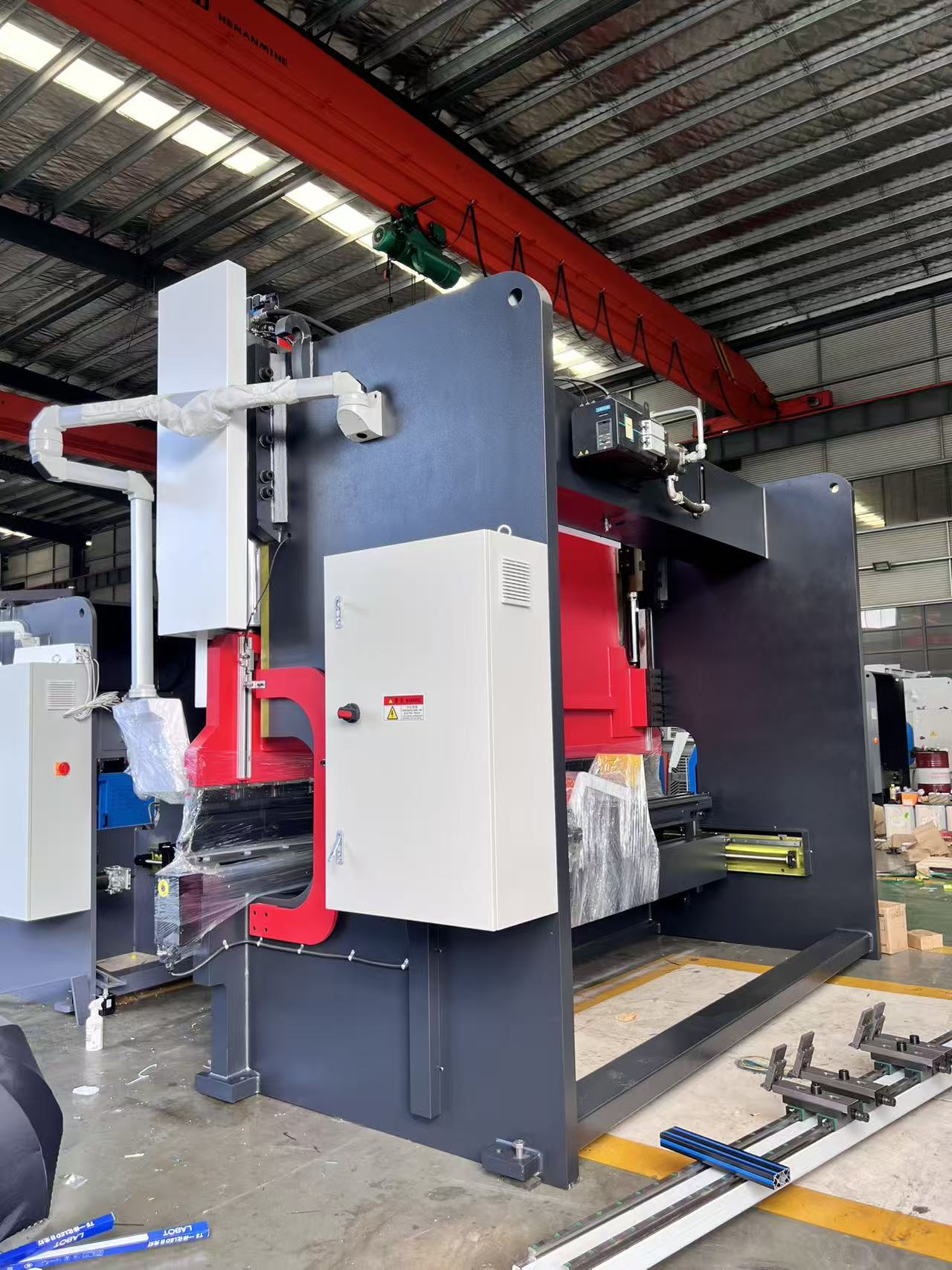
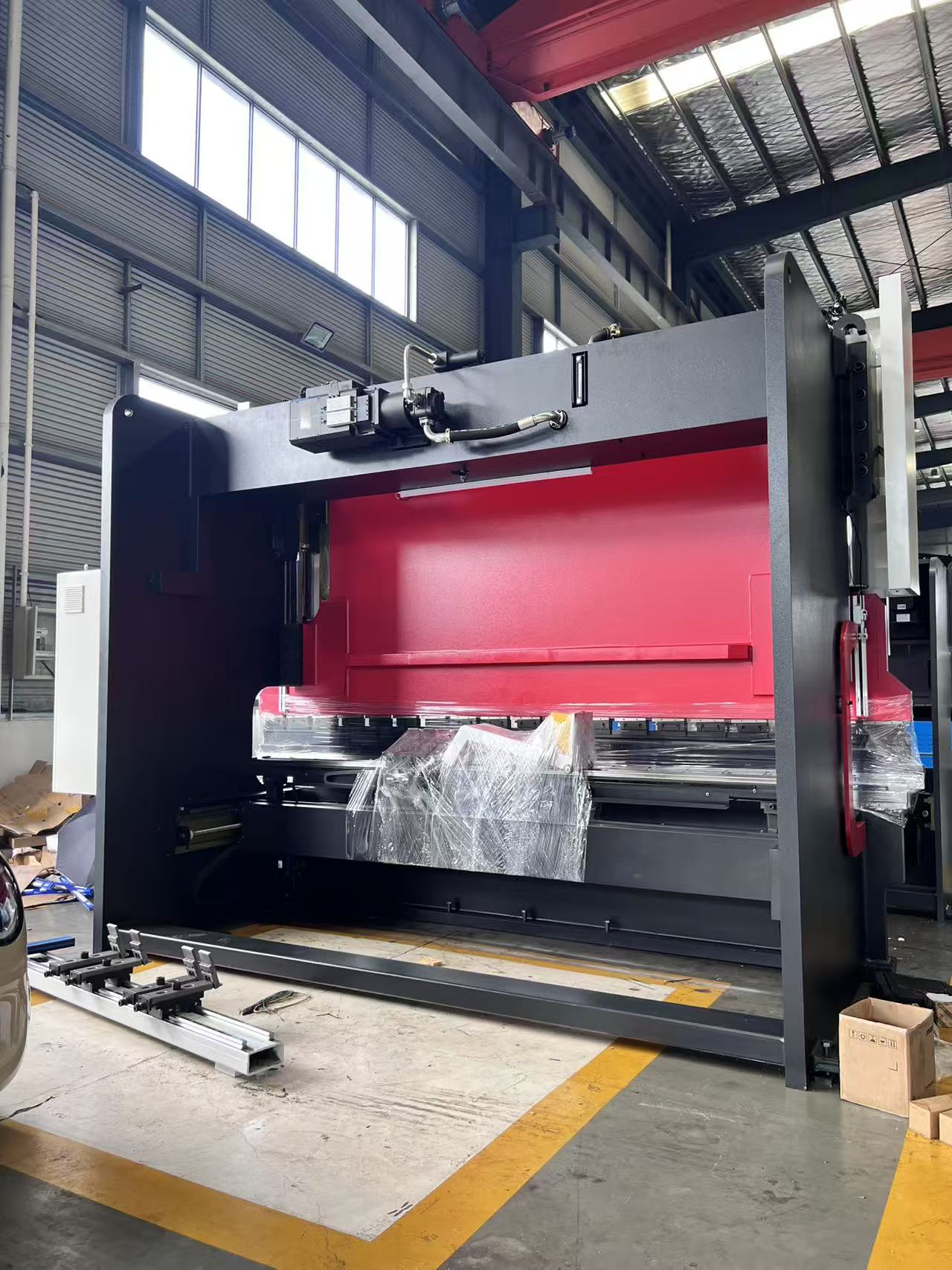
130T/4000 Press Brake on the Trailer: How a Four-Metre Machine Leaves the Factory
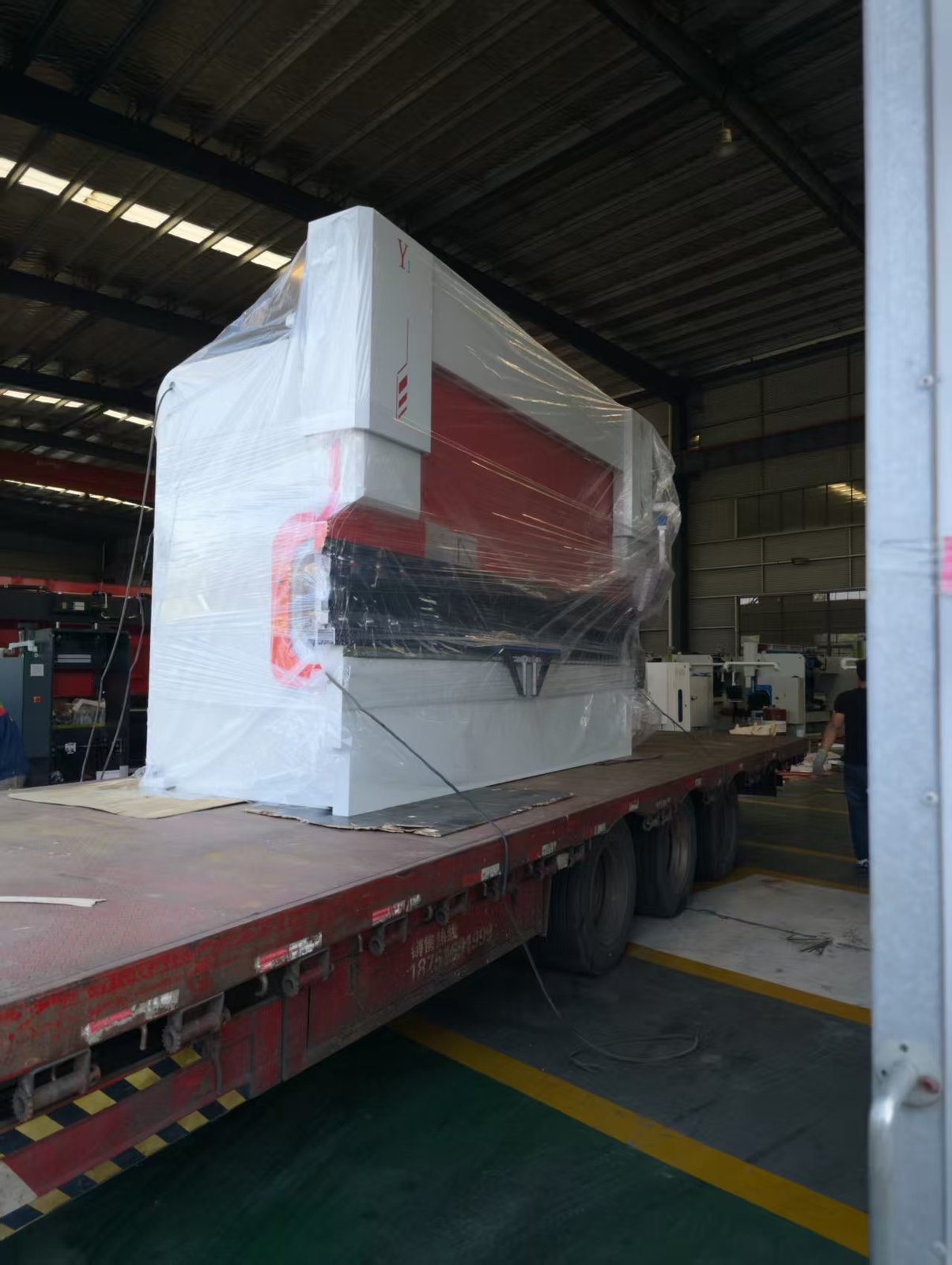
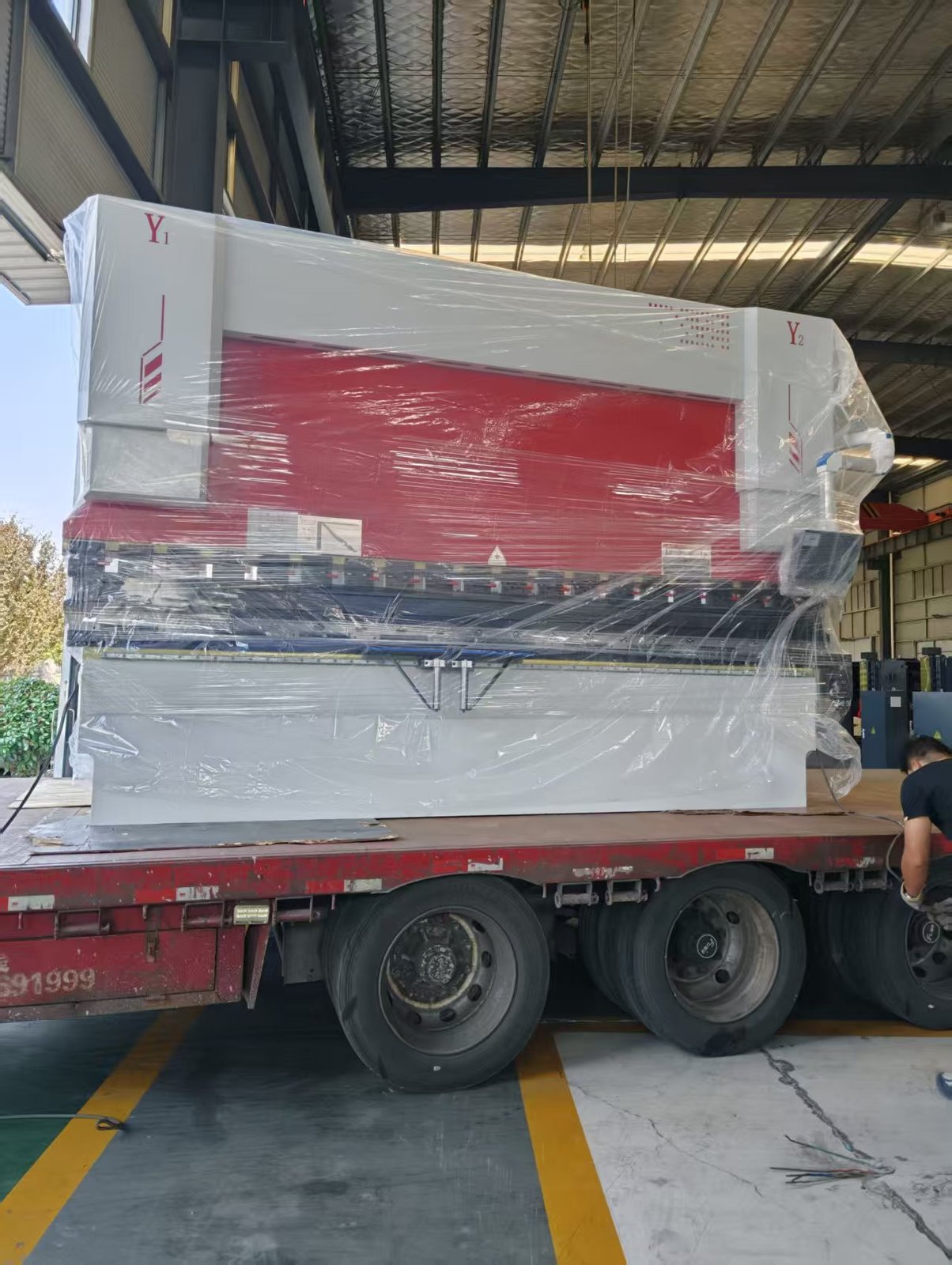
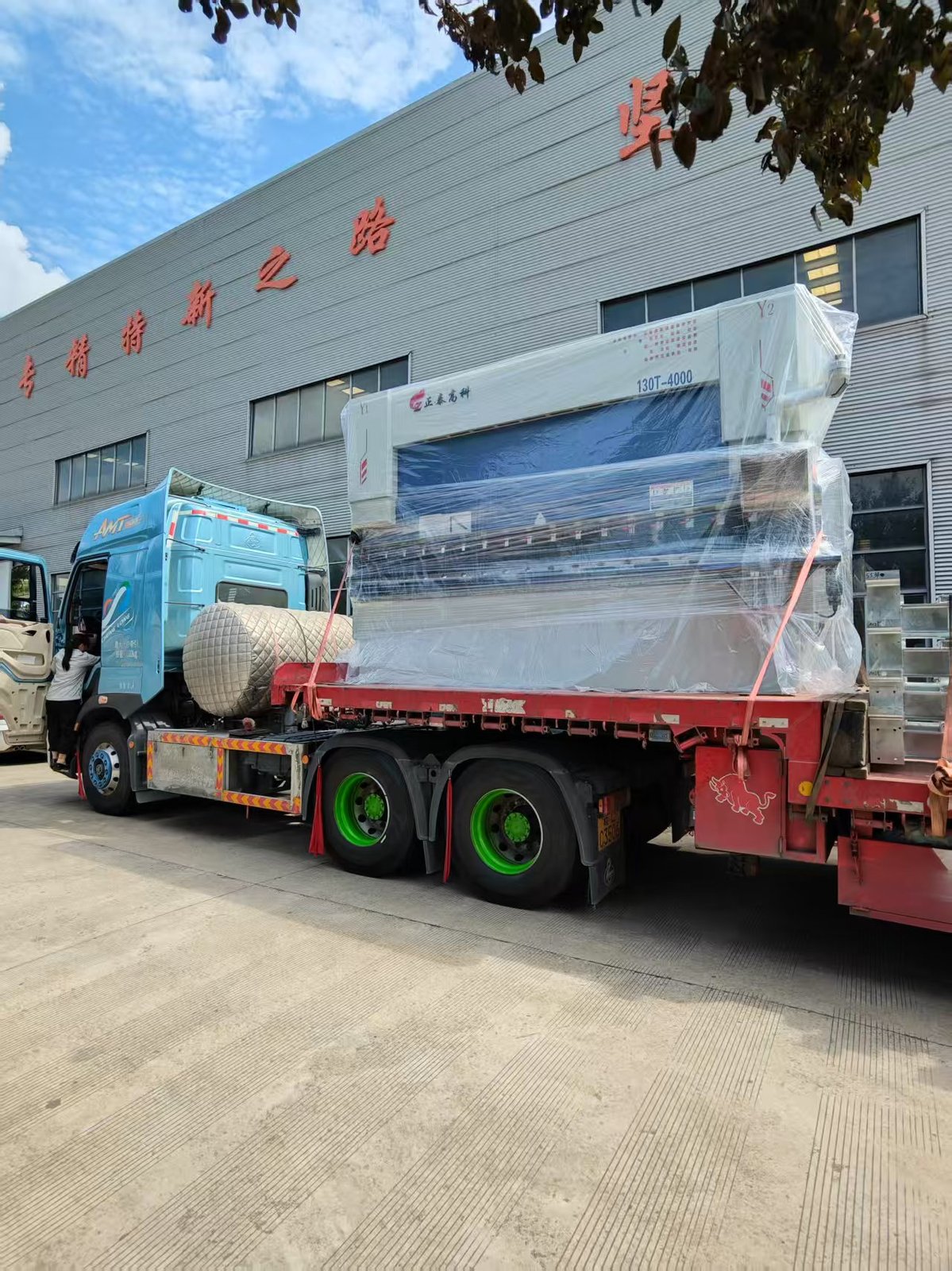
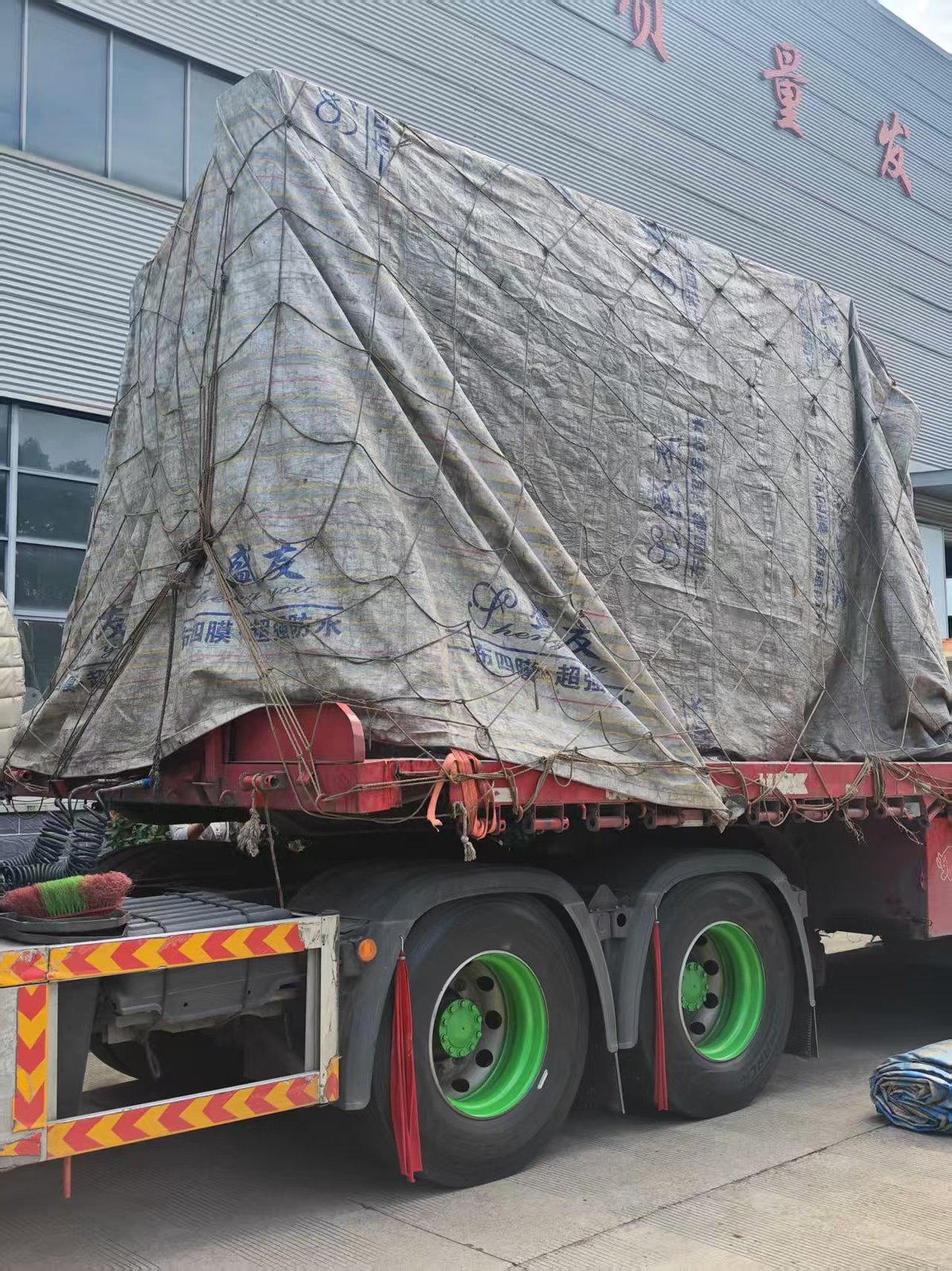
Today's photos: a 130 T / 4000 mm press brake wrapped in stretch film and lashed to a flatbed trailer, rolling out of our loading bay on its way to the port. This is the most popular mid-size configuration we build — large enough for a serious fabrication shop, still small enough to ship in one piece without splitting the machine apart.
1. What 130T/4000 Actually Covers
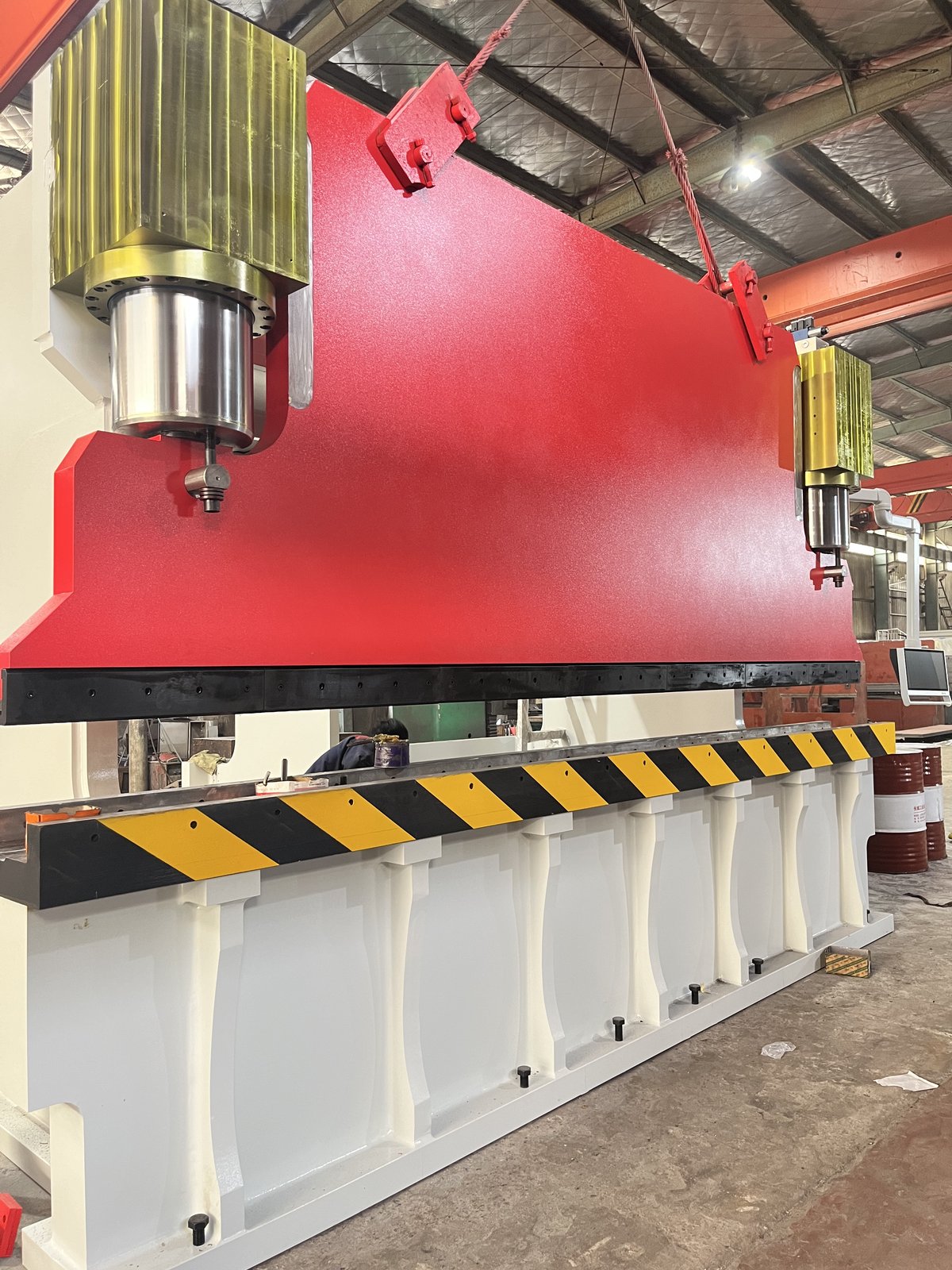
130 tonnes — about 1275 kN — spread across a 4000 mm bed. Used along the whole length, that is roughly 4–5 mm mild steel; concentrate the same force on a shorter piece near the centre and the machine handles 8–10 mm. In practice this size serves ventilation ducting, panel and facade work, electrical enclosures, chassis frames and agricultural parts — the middle band of fabrication that neither a bench brake nor a 250-tonne machine covers well.
2. How a Four-Metre Press Brake Gets Packed
A machine that ships in one piece arrives in one piece — every bolt we loosen at the factory is a bolt somebody has to refit, and a datum we hand over to the customer to find again.
- Loaded as a single unit — the frame, ram and bed travel assembled, sitting on a timber base that spreads the weight across the trailer deck;
- Stretch film, not a wooden crate — several layers of wrap hold dust and moisture out and let the machine be lifted and re-lashed at the port without unpacking;
- Lashed, not parked — steel straps from the machine's own lifting lugs down to the trailer's twist-locks take the road shocks of the trip to the terminal;
- Control pendant protected separately — the screen and its arm are the most fragile parts of any press brake, so they are wrapped and padded on their own, as you can see at the right of the second photo;
- Loose parts boxed — tooling segments, foot switch, manuals and spare seals travel in a separate marked crate bolted to the same deck.
3. Why Buyers Choose This Size
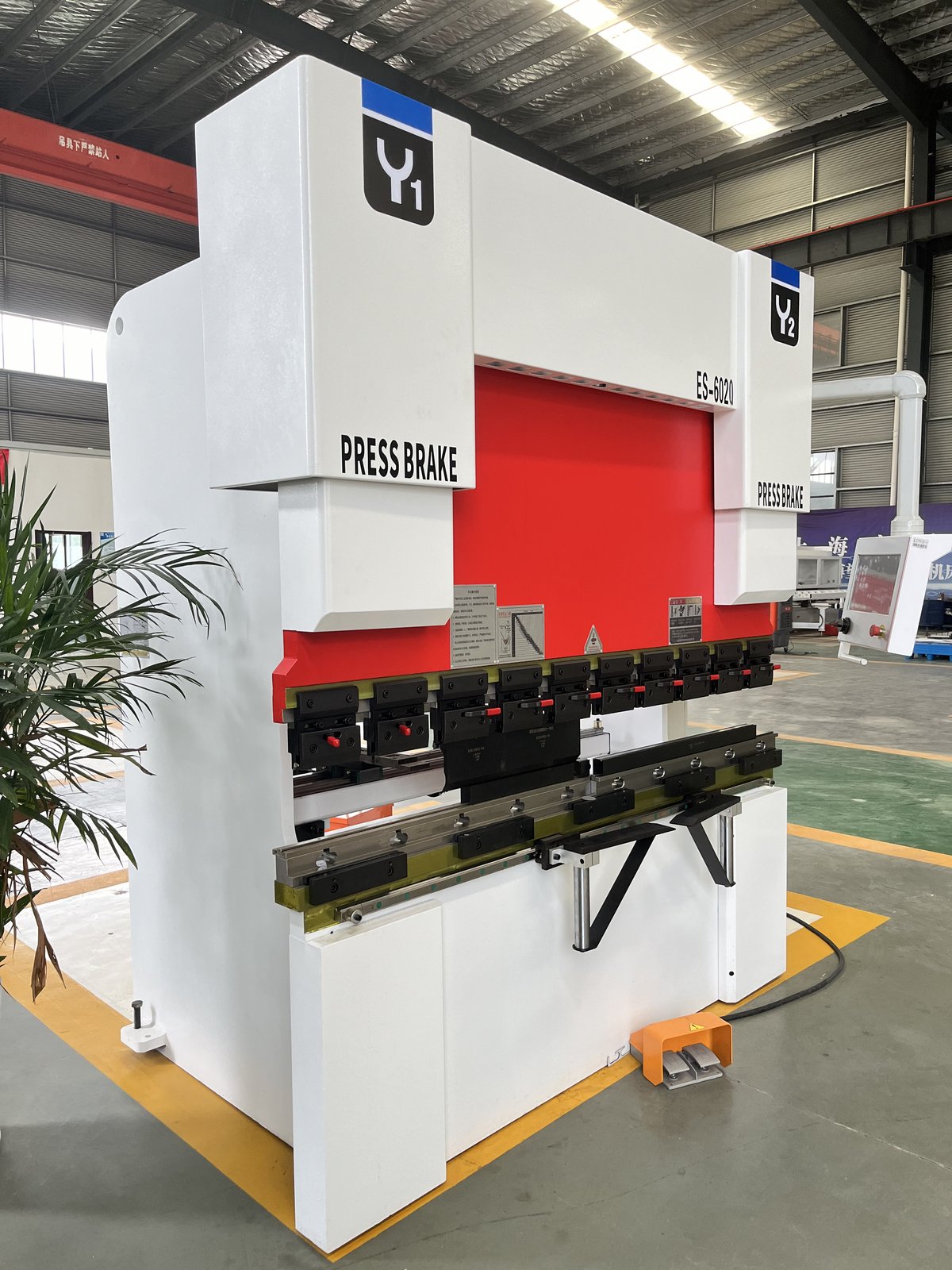
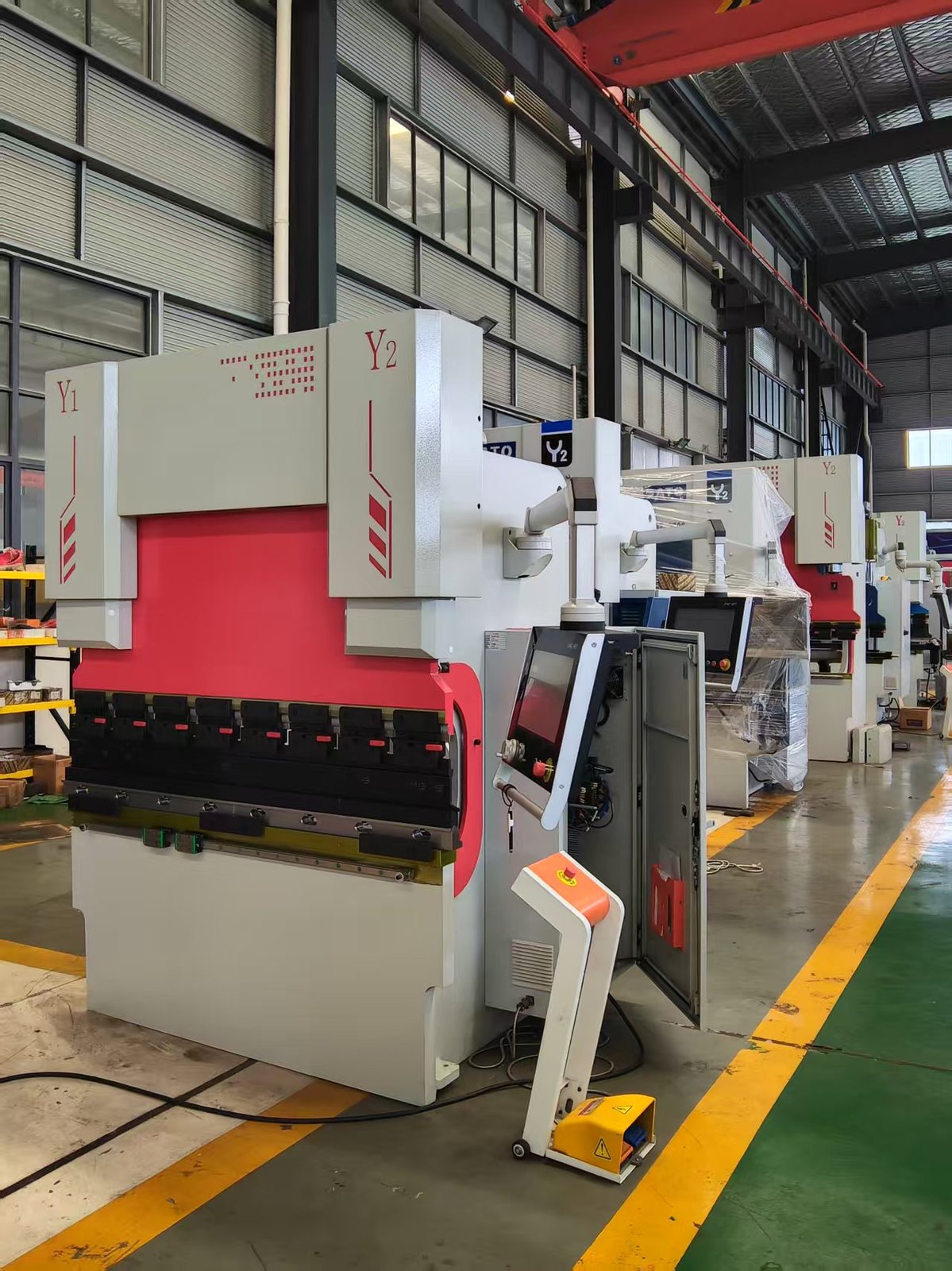
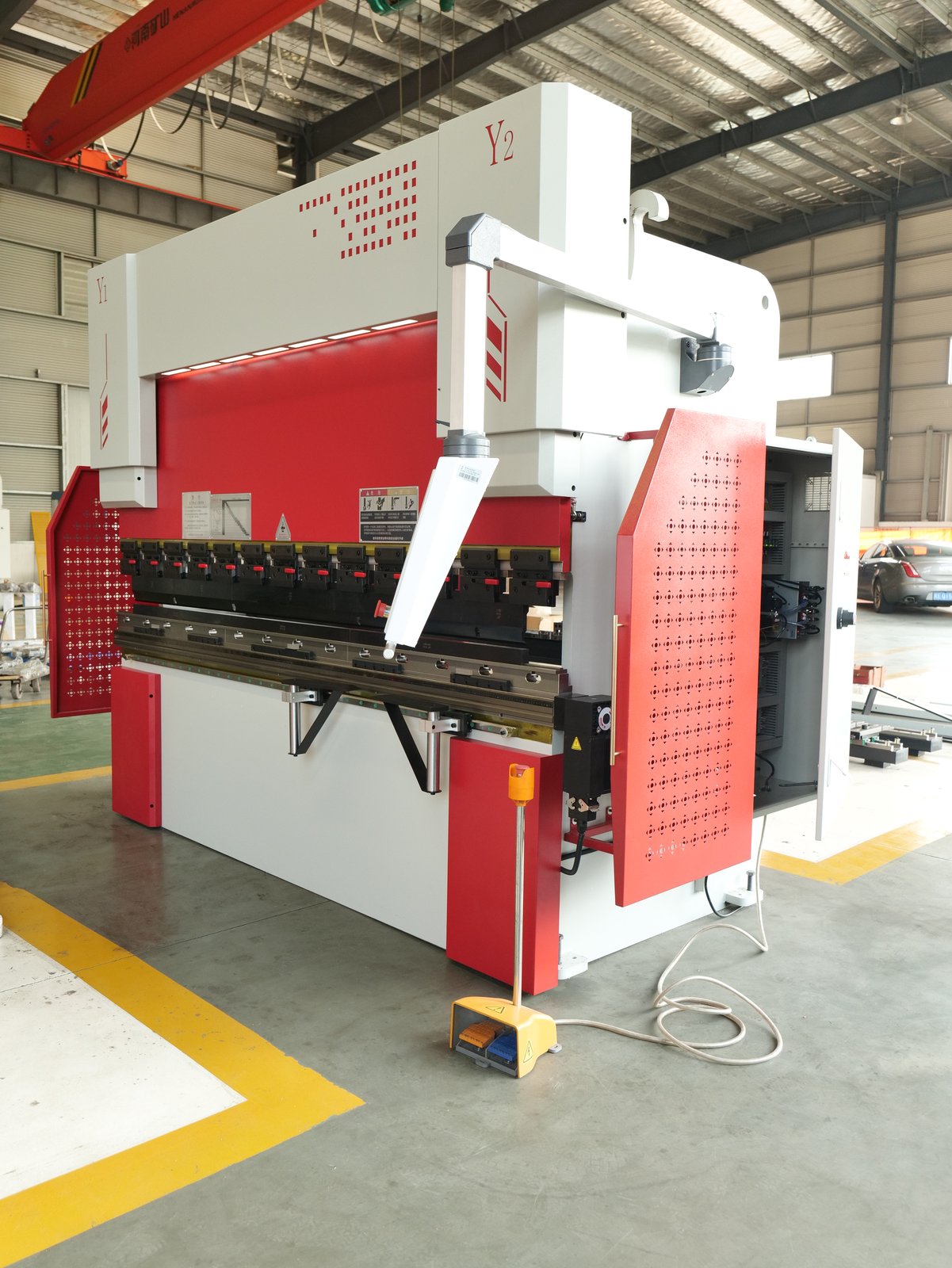
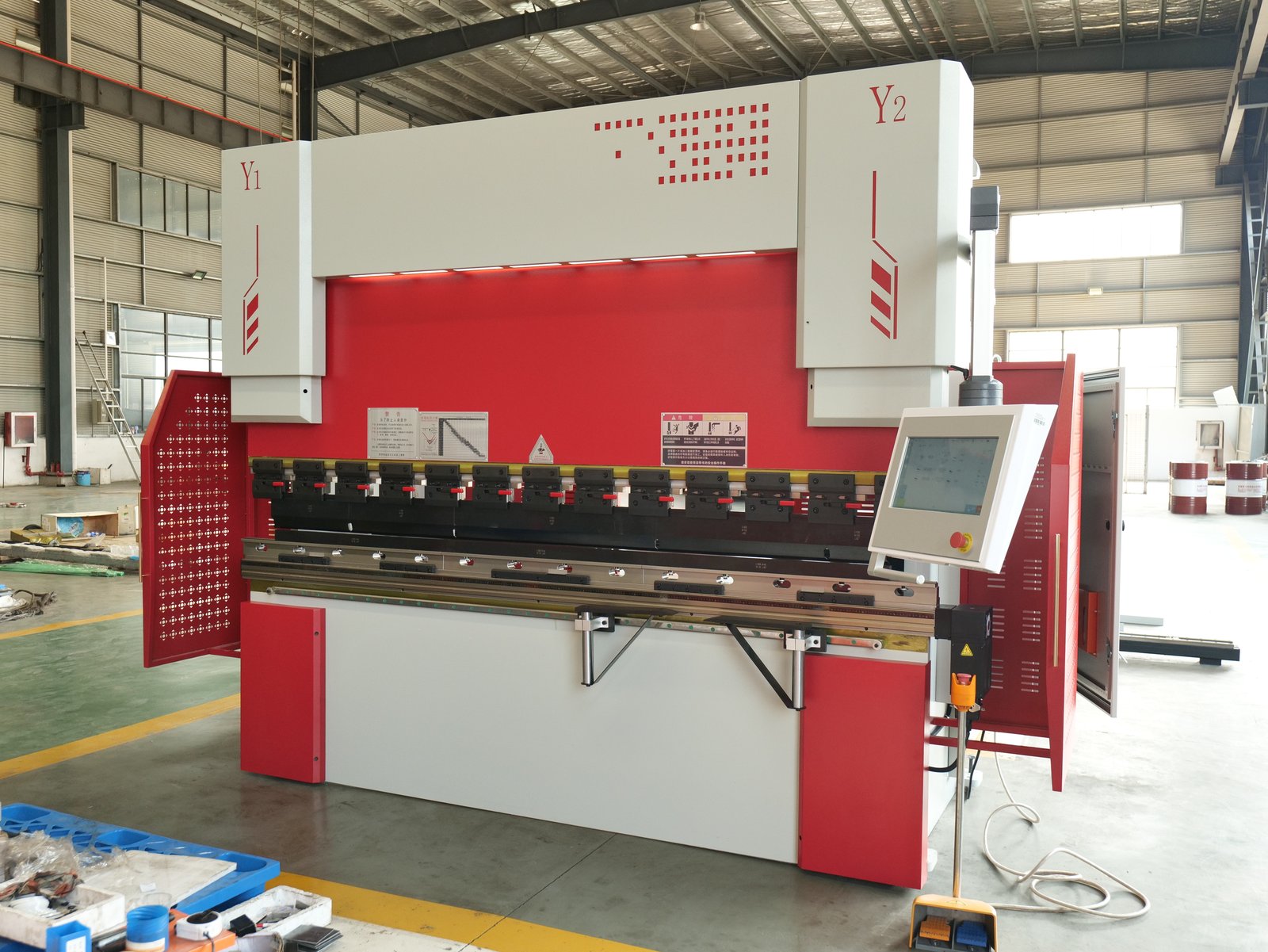
- Two independent cylinders, Y1 and Y2 — the labels on the side housings give away the layout: the CNC reads both cylinders and corrects the ram tilt continuously, so parallelism does not depend on the operator;
- Still one truck, still one container slot area — a 4 m brake needs flat-rack or trailer space, not a special heavy-haul permit the way a 5 or 6 m machine does;
- Room to grow — shops that start at 100 T tend to fill this machine within two years; buying 130 T now avoids the awkward second purchase;
- Tooling is standard — 4000 mm machines use common American-European style tooling, so replacement dies are available locally instead of only from us.
Is 130T/4000 your size? Send us your maximum bend length and thickness — we reply with a quotation within 24 hours.